Ebola outbreak sees 136 suspected deaths in DRC, officials say
More than 40 health experts were deployed to the field on Sunday.
At least 543 suspected cases and 136 suspected deaths have been recorded in the ongoing Ebola outbreak in the eastern Democratic Republic of the Congo, officials said Tuesday.
Congolese Minister of Public Health Samuel Roger Kamba said during a press briefing that authorities will determine which of these deaths "are actually linked to the disease."
At least 30 cases of Ebola have been confirmed in Congo, officials said. Cases have been reported in urban areas, including one of Congo's largest cities, Goma, the rebel-held capital of the eastern province of North Kivu, according to World Health Organization Director-General Dr. Tedros Adhanom Ghebreyesus.
Uganda has also confirmed two cases in its capital Kampala, including one death, among two individuals who traveled from neighboring Congo, according to Tedros.

During the WHO's annual World Health Assembly in Geneva on Tuesday, Tedros said he is "deeply concerned" about the outbreak while explaining why he declared a public health emergency of international concern in connection with the Ebola cases in Congo and neighboring Uganda.
"I did not do this lightly," Tedros said. "I did it in accordance with Article 12 of the International Health Regulations, after consulting the ministers of health of both countries, and because I am deeply concerned about the scale and speed of the epidemic. We will convene the Emergency Committee today to advise us on temporary recommendations."
The outbreak is caused by the Bundibugyo virus, a rare variant of Ebola for which there are no approved vaccines or therapeutics, Tedros said. According to The Associated Press, more than 20 Ebola outbreaks have occurred in Congo and Uganda, but this is only the third time that the Bundibugyo virus has been detected.
Health officials in Uganda say they feel "very confident" in dealing with the epidemic.
"We have built capacity in the country. We have built the human capital and the skill. We have infrastructure," Dr. Diana Atwine, who serves as the acting health minister for Uganda, told ABC News on Tuesday. "We have very strong surveillance teams. That's what we do best."
Health officials in Uganda are working at border checkpoints to ensure any incoming travelers are screened for potential illness, she said. Testing sites and diagnostic laboratories have also been activated to support the public health response.
The State Department said Tuesday it was launching a Disaster Assistance Response Team (DART) to address the outbreak, according to a department official. Members of the team were headed to Kinshasa in Congo and Kampala in Uganda, according to the official.
The department said it would also fund up to 50 clinics in Ebola-affected regions of Congo and Uganda that will provide emergency screening, triage and isolation capacity. These clinics will be run by government partners and primarily funded through contributions the U.S. has already provided to the United Nations.
Dr. Anne Ancia, WHO's representative in the DRC, said Tuesday that more than 40 experts were deployed to the field on Sunday. The WHO has sent 12 tons of supplies so far -- including personal protective equipment for frontline healthcare workers, laboratory samples, tents, drugs and other treatments -- with six more tons coming, she said.
"What I see here in the field is extremely vulnerable people, a [fragile] population," Ancia said. "But I see also people working together while facing great uncertainty as to the [scale] or the extent of this outbreak."
She said the surveillance capacity is limited in the affected region, which could be why the outbreak is spreading rapidly.
"We really need to go fast to really try to stop the spread of the disease further," she said. "We don't understand yet the extent of the spread of the disease."
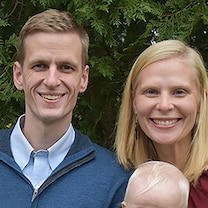
An American doctor working in the DRC is among those who have tested positive for Ebola amid the outbreak, according to an international Christian missions organization.
Dr. Peter Stafford, a medical missionary with the missions organization Serge, was exposed while treating patients at Nyankunde Hospital, the group said Monday.
He sought testing "after presenting symptoms consistent with the virus," Serge said in a statement.

Dr. Scott Myhre, a colleague of Stafford, said the doctor was exposed to Ebola during surgery on a "very sick" patient who later died.
Scott said Stafford developed symptoms that can resemble other diseases including fever, aches, chills and fatigue -- which can make Ebola difficult to diagnose and treat.
Stafford has since received IV fluids and was put on a biocontamination plane Tuesday morning to a U.S. military base in Germany, Scott said. He added that Stafford was put on the plane in a plastic bubble-like contraption to avoid exposing others traveling with him.
Other high-risk contacts, including Stafford's wife and children, are being monitored in quarantine and are expected to be flown to Germany on Wednesday, according to Scott.
Dr. Satish K. Pillai, incident manager for the Centers for Disease Control and Prevention's Ebola response, confirmed at a CDC press conference on Tuesday that six other high-risk contacts "are also having movement plans that are finalizing and will be transiting to Europe as well shortly."
He added that genetic testing from this outbreak shows it is similar to the "genetic fingerprints" from outbreaks in 2007 and 2012, meaning there are diagnostic tools available that can detect this strain of Ebola.
Pillai said on Monday that the agency had activated its Emergency Operations Center through its country offices in the DRC and in Uganda, and is deploying technical experts that have been requested from Atlanta headquarters.
The CDC said Monday that it is preparing to restrict entry for travelers arriving from parts of central Africa where an Ebola outbreak has been declared, in coordination with the Department of Homeland Security.
The risk to the U.S. general public remains low, Pillai said.
ABC News' Youri Benadjaoud, Eric M. Strauss and Mary Kekatos contributed to this report.
Related Topics

Popular Reads
ABC News Live