Iran thinks it has 'upper hand,' former Pentagon official says, amid tension over Strait of Hormuz
Iran said it is closing the Strait of Hormuz but the U.S. has disputed that.
Iran is willing to risk rupturing nuclear talks and closing the Strait of Hormuz because the regime believes it holds the "upper hand," Mick Mulroy, a former Pentagon official who oversaw Middle East defense policy in the first Trump administration, told ABC News.
Iran's military announced Saturday it was closing the strait, citing Israel's continued attacks in Lebanon and a "blatant breach" by the U.S. of the first clause of the memorandum of understanding, which calls for the war to end on all fronts. Yet U.S. Central Command said Saturday that Iran does not control the waterway, and that traffic continues to flow.
That tension is the backdrop for a deal already showing strain just days after it was signed.

What's clear, Mulroy said, is that Iran believes it is negotiating from strength. It now has the power to choke off a fifth of the world's energy supply -- a lever it did not exercise before the war. President Donald Trump is constrained by economic pressure and rising gas prices heading into the midterms, Mulroy said. Iran is also already collecting sanctions relief and the ability to sell its oil, before substantive talks have even begun.
"They're getting most of the benefits that we never thought that we would concede to -- by any administration -- before we even get into the nuclear discussions," Mulroy said.
Mulroy is an ABC News contributor.
A fight over tolls
Trump has insisted the war left Iran badly weakened, saying in social media posts Friday that the country has been "diminished" — stripped of its air force, navy, radar and antiaircraft systems — and declaring Iran "FINISHED."
He has also drawn a hard line on tolls. Hours after Iran said it had closed the strait, Trump reiterated that ships will face no tolls during the 60-day ceasefire period or after -- with one exception.
"There will be NO TOLLS after the 60 day period has expired, unless they are imposed by and for the United States of America, should the deal not be completed, for services rendered as the Guardian Angel to the countries of the Middle East," Trump wrote Saturday.

But that’s not in the signed U.S.-Iran deal, which says Iran will allow ships to pass the Strait with “no charge for 60 days only”
Israel cut out of the deal

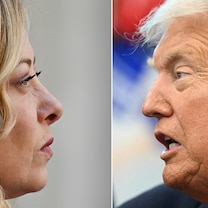
The conflict in Lebanon is emerging as a second potential spoiler.
Mulroy noted that Israel -- which heavily influenced the U.S. decision to enter the war -- has now been cut out of a deal it does not want. Rather than the regime change, he says, Iran is left with "essentially a younger version of the same regime," and Israel would argue the financial relief in the MOU lets Tehran rebuild its military beyond pre-war strength.
The rift is increasingly public. The Washington Post reported Friday that U.S. intelligence agencies have warned the administration that Israeli Prime Minister Benjamin Netanyahu is likely to take steps undermining Trump's push for a peace deal. In an interview taped Thursday with Axios, Trump cast himself as Israel's indispensable restraint.
"If it weren't for Donald Trump and Bibi Netanyahu — who I work well with, but he will tell you, we're the ones with the guns, we're the ones with the B-2 bombers — Israel would have been eviscerated," Trump said.
Vice President JD Vance went further, suggesting parts of Israel's government are reacting to "misinformation" about the deal.
"It's clear that large segments of the Israeli political system and population are very sensitive about this deal. But I also think they're picking up on some misinformation about the deal and running with it and sort of panicking about it," Vance told the New York Times.
He singled out far-right ministers Itamar Ben-Gvir and Bezalel Smotrich, who have attacked the agreement, while pointedly noting that Netanyahu himself had not.
"What is your exact proposal? You're a country of nine million people. You can't just kill your way out of solving every single national security problem that you have," Vance said.
What comes next
On Saturday, Vance left for Switzerland where talks between the U.S. and Iran are expected to take place.
Vance will join Special Envoy Steve Witkoff and Jared Kushner who are already on the ground in Europe. Vance said Pakistan and Qatar would also be involved in the talks.
"I think we're going to hopefully make progress on the nuclear issue, make progress on the Lebanon ceasefire issue," Vance told reporters Saturday before taking off.
But Iran has a long record of running out the clock -- and delay may be the whole strategy again.
"They can wait us out and hope that they get another administration in the future that's more aligned with what they're willing to agree to — if anything — because they haven't even agreed to give up their enrichment program," Mulroy said.
Related Topics

Popular Reads
ABC News Live