President Trump says US Navy will begin blockade of Strait of Hormuz

The U.S. and Iran failed to reach a peace deal after 21 hours of negotiations.

Last Updated: April 12, 2026, 10:22 PM EDT

President Donald Trump announced "major combat operations" against Iran on Feb. 28, with massive joint U.S.-Israeli strikes targeting military and government sites.

Trump set a deadline for Iran to fully reopen the Strait of Hormuz or face broad strikes on its critical infrastructure. Hours before the deadline expired, Trump said he had agreed to suspend planned bombing for two weeks if Iran agreed to reopen the Strait of Hormuz.

Iranian Foreign Minister Abbas Araghchi then said that "safe passage through the Strait of Hormuz will be possible via coordination with Iran's Armed Forces and with due consideration of technical limitations."

Israeli Prime Minister Benjamin Netanyahu said he supported the ceasefire with Iran, but that Lebanon -- where intense Israeli strikes continued -- was not covered by the agreement, despite Iranian protests.

Apr 07, 2026, 11:37 PM EDT

Netanyahu supports Trump's decision to suspend strikes, says ceasefire does not include Lebanon

A statement from the office of Israeli Prime Minister Benjamin Netanyahu says Israel supports President Donald Trump's decision to suspend strikes against Iran for two weeks subject to Iran immediately opening the Strait of Hormuz.

The two-week ceasefire does not include Lebanon, the prime minister's office said.

Apr 07, 2026, 11:12 PM EDT

Leavitt says ceasefire deal is 'victory' for US

Following the announcement of a temporary ceasefire between the U.S. and Iran, White House press secretary Karoline Leavitt celebrated the development.

"This is a victory for the United States that President Trump and our incredible military made happen,” Leavitt said in a social media post. "From the very beginning of Operation Epic Fury, President Trump estimated this would be a 4-6 week operation."

The post went on: "The success of our military created maximum leverage, allowing President Trump and the team to engage in tough negotiations that have now created an opening for a diplomatic solution and long-term peace."

Leavitt also credited Trump, saying he "got the Strait of Hormuz reopened."

Earlier, Iran's foreign minister said in a statement the two-week deal includes "safe passage" through the strait "via coordination with Iran's Armed Forces."

Apr 07, 2026, 7:44 PM EDT

Iran responds to Trump ceasefire proposal, including plan for 'safe passage' through Strait of Hormuz

Responding to President Donald Trump's ceasefire proposal, Iran declared victory Tuesday with Iran's foreign minister saying the Iranian military will "cease their defensive operations" if the U.S. halts its attacks.

Regarding the reopening of the Strait of Hormuz, Iran Foreign Minister Seyed Abbas Araghchi said: "For a period of two weeks, safe passage through the Strait of Hormuz will be possible via coordination with Iran's Armed Forces and with due consideration of technical limitations."

It was not immediately clear if such a proposal would satisfy Trump's demand for the "COMPLETE, IMMEDIATE, and SAFE" reopening of the strait.

Following Trump's announcement, a lengthy statement from Iran's Supreme National Security Council posted on Iranian state media, claimed the U.S. agreed to their plan which includes numerous concessions.

The White House has not responded directly to the claims in the statement.

White House Press Secretary Karoline Leavitt released a statement that read:

"President Trump's words speak for themselves: this is a workable basis to negotiate, and those negotiations will continue. The truth is that President Trump and our powerful military got Iran to agree to reopening the Strait of Hormuz, and negotiations will continue."

In announcing the ceasefire proposal, Trump called Iran'. 10-point plan "a workable basis on which to negotiate" but did not provide specifics.

The Supreme National Security Council said two weeks of negotiations are set to begin later this week.

White House press secretary Karoline Leavitt said there are discussions about in-person talks, "but nothing is final until announced by the President or the White House."

This post has been updated with additional information.
Apr 07, 2026, 6:44 PM EDT

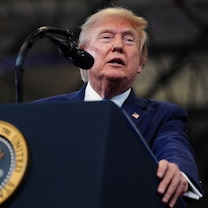
Trump agrees to 'suspend the bombing and attack of Iran' for two weeks if Iran opens Strait of Hormuz

President Donald Trump says he has agreed to suspend a planned bombing attack on Iran for two weeks if Iran agrees to reopen the Strait of Hormuz.

In the post on his social media platform, less than two hours before a self-imposed deadline in which he had threatened "a whole civilization will die," Trump cited conversations with Pakistani officials, including Prime Minister Shehbaz Sharif, who have been negotiating an off-ramp.

In the post, Trump said, "subject to the Islamic Republic of Iran agreeing to the COMPLETE, IMMEDIATE, and SAFE OPENING of the Strait of Hormuz, I agree to suspend the bombing and attack of Iran for a period of two weeks. This will be a double sided CEASEFIRE!"

In the post, Trump said the U.S. has received a 10-point proposal from Iran and "believe it is a workable basis on which to negotiate. Almost all of the various points of past contention have been agreed to between the United States and Iran, but a two week period will allow the Agreement to be finalized and consummated."

Sponsored Content by Taboola