President Trump says US Navy will begin blockade of Strait of Hormuz

The U.S. and Iran failed to reach a peace deal after 21 hours of negotiations.

Last Updated: April 12, 2026, 10:22 PM EDT

President Donald Trump announced "major combat operations" against Iran on Feb. 28, with massive joint U.S.-Israeli strikes targeting military and government sites.

Trump set a deadline for Iran to fully reopen the Strait of Hormuz or face broad strikes on its critical infrastructure. Hours before the deadline expired, Trump said he had agreed to suspend planned bombing for two weeks if Iran agreed to reopen the Strait of Hormuz.

Iranian Foreign Minister Abbas Araghchi then said that "safe passage through the Strait of Hormuz will be possible via coordination with Iran's Armed Forces and with due consideration of technical limitations."

Israeli Prime Minister Benjamin Netanyahu said he supported the ceasefire with Iran, but that Lebanon -- where intense Israeli strikes continued -- was not covered by the agreement, despite Iranian protests.

Apr 08, 2026, 2:17 PM EDT

Israel 'prepared to return to fighting at any moment necessary,' Netanyahu says

Israeli Prime Minister Benhamin Netanyahu said despite Iran being "weaker than ever," Israel still has "more goals to complete and we will achieve them, either by an agreement or by a return to fighting."

"We are prepared to return to fighting at any moment necessary. Our finger is on the trigger," Netanyahu said in Hebrew at a press conference Wednesday.

Prime Minister of Israel Benjamin Netanyahu speaks in Jerusalem, April 8, 2026.
GPO/Reuters

Netanyahu said of the ceasefire, "this is not the end, but a station on the way to reaching our aims."

Netanyahu also said that the ceasefire agreement does not include Hezbollah, saying: "We will continue to go after them." He also said Israeli strikes on Lebanon today were the "hardest since the beeper attack," referencing the 2024 attack on Hezbollah members using exploding electronic devices.

-ABC News' Jordana Miller

Apr 08, 2026, 1:59 PM EDT

Oil tankers passage halted in Hormuz after Israeli strikes on Lebanon, Fars reports

Following Israel's attacks on Lebanon, oil tankers are suspended from passing through the Strait of Hormuz, Iran's semi-official Fars News Agency reported on Wednesday.

"This morning, after Trump accepted Iran's terms and a ceasefire was formed, two oil tankers were able to safely pass through the Strait of Hormuz with permission from Iran," Fars added.

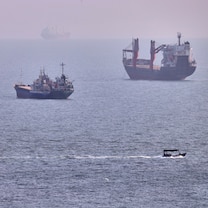
Vessels and boats off the coast of Musandam governorate, overlooking the strait of Hormuz, in Musandam governance, in Oman, April 8, 2026.
Stringer/Reuters

"Simultaneously with the Israeli attacks on Lebanon, the passage of oil tankers through the Strait of Hormuz has been halted," according to Fars.

Fars News Agency is affiliated with the IRGC but did not attribute the report to a specific source.

-ABC News' Somayeh Malekian

Apr 08, 2026, 1:55 PM EDT

Vance, Kushner and Witkoff to head to Islamabad this weekend, Leavitt says

White House press secretary Karoline Leavitt announced that “the President is dispatching his negotiating team, led by the Vice President of the United States, JD Vance, Special Envoy Witkoff and [Jared] Kushner to Islamabad for talks this weekend. The first round of these talks will take place on Saturday morning local time.”

Apr 08, 2026, 1:53 PM EDT

Iranian official calls Israeli strikes on Lebanon ‘massacres,’ urges US to choose ceasefire or war

Iranian foreign minister Abbas Araghchi described the Israeli strikes on Lebanon as "massacres" that the world is witnessing, in a post on X on Wednesday.

Quoting Pakistan Prime Minister Shehbaz Sharif's post on X about the two-week ceasefire, Araghchi highlighted that the agreement includes halting attacks on Lebanon.

He asked the U.S. to choose between "ceasefire or continued war via Israel."

First responders stand amid rubble at the site of an Israeli airstrike in Beirut's Corniche al-Mazraa neighbourhood, April 8, 2026.
AFP via Getty Images

Sponsored Content by Taboola