Russia-Ukraine updates: Russian missiles hit close to nuclear reactors: IAEA director

Shelling is ongoing near the largest nuclear power plant in Europe.

Last Updated: August 24, 2023, 10:20 AM EDT

Russian President Vladimir Putin's "special military operation" into neighboring Ukraine began on Feb. 24, with Russian forces invading from Belarus, to the north, and Russia, to the east. Ukrainian troops have offered "stiff resistance," according to U.S. officials.

The Russian military has since launched a full-scale ground offensive in eastern Ukraine's disputed Donbas region, capturing the strategic port city of Mariupol and securing a coastal corridor to the Moscow-annexed Crimean Peninsula.

For previous coverage, please click here.

Jul 01, 2022, 12:50 PM EDT

Ukraine submits memo to International Court of Justice on Russian aggression

Ukraine on Friday submitted a memorandum to the International Court of Justice on Russian aggression.

"We prove that Russia violated the Genocide Convention by justifying its aggression with a false pretext of a 'genocide' that never was," tweeted Dmytro Kuleba, Ukrainian Minister of Foreign Affairs.

He called it a "critical step to hold Russia accountable and make Russia pay for the harm it has inflicted."

Jul 01, 2022, 11:27 AM EDT

Most Ukrainians want to return home

Close to 90% of refugees who fled Ukraine since the start of Russia's invasion plan to return home at some point, according to a recent poll by the Rating group.

Only 8% of refugees said they would never return to Ukraine, while 15% are prepared to go back as soon as possible, the poll showed.

Around half of those displaced only plan on returning when the war is over. Close to a third of people who lost their jobs because of the war are still not able to find new employment, the data revealed.

-ABC News' Edward Szekeres, Max Uzol, Fidel Pavlenko and Yuriy Zaliznyak

Jul 01, 2022, 9:42 AM EDT

Moscow denies targeting civilians in Odesa

Russia has dismissed reports from Ukrainian officials that Russian missiles struck residential areas in the southern town of Odesa early on Friday morning and reiterated its claim that Moscow does not target civilians.

“I would like to remind you of president [Vladimir Putin's] words that the Russian Armed Forces do not engage with civilian targets,” Kremlin spokesman Dmitry Peskov said on a conference call with reporters on Friday.

Ukrainian authorities had earlier said Russian missiles hit an apartment building and two holiday camps in the region, killing at least 20 people and wounding dozens of others, including children.

To counter the threat of indiscriminate Russian strikes, NATO Secretary General Jens Stoltenberg pledged more supplies of advanced weapons and equipment to Ukraine on Thursday.

Speaking at a press conference in Madrid, Stoltenberg said NATO has a list of requested equipment and nothing would be ruled out or excluded from that list. Several NATO countries expressed reservations about the transfer of some weapons –- including tanks and other heavy weapons -– to Ukraine in the first months of the war.

-ABC News' Edward Szekeres, Max Uzol, Fidel Pavlenko and Yuriy Zaliznyak
Jul 01, 2022, 8:59 AM EDT

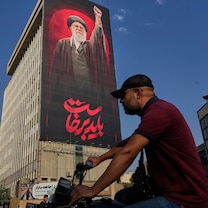
Will Russia become a pariah state?

In response to the invasion of Ukraine, the West has imposed unprecedented sanctions on Russia, nearly crippling its economy and isolating it from all but a few allies.

U.S. President Joe Biden and other government officials have said sanctions from the United States and its allies will make Russia and its leader, Vladimir Putin, pariahs on the world stage.

However, one expert who spoke with ABC News says that casting Russia out of the international community, making it a pariah state, may not be so easy.

"Russia is a member of the UN security council, it has veto power there. It is just a major actor on the world stage in so many ways. So isolating Russia, shaming it, making it a pariah is a huge challenge," said Daniel Hamilton, a nonresident senior fellow at the Brookings Institute.

Yet, "Russia has not done too well with allies," Hamilton also said.

"Today, it's real allies are ... sort of also pariah states. It's Assad's Syria, it's Venezuela, it's Cuba and that's about it. Others tolerate Russia. They figure out ways to deal with it, in the former Soviet space. But they're not really allies," Hamilton said.

Related Topics

Sponsored Content by Taboola