State Dept. condemns arrests, repression in Russia

It called for the release of protesters and opposition leader Alexey Navalny.

This is the fifth day of the administration of President Joe Biden and Vice President Kamala Harris.

Top headlines:

Here is how events are unfolding. All times Eastern.
Jan 21, 2021, 10:48 AM EST

Biden's 1st day executive actions

Biden's first full day in office is focused on the coronavirus pandemic, with the president set to deliver afternoon remarks and take 10 executive actions aimed to help get the pandemic under control.

Those actions include eight executive orders to trigger the the Defense Production Act to manufacture COVID-19 supplies, require masks in airports and on interstate transportation, require international travelers to the U.S. receive a negative COVID-19 test before arrival, establish a testing board, develop more treatments and vaccines, work to overcome the disproportionate impact of COVID-19 on minority communities, provide guidelines to reopen schools -- as well as a presidential memorandum to reimburse schools for supplies from FEMA funds -- create guidelines to protect workers from exposure, and increase collection and analysis.
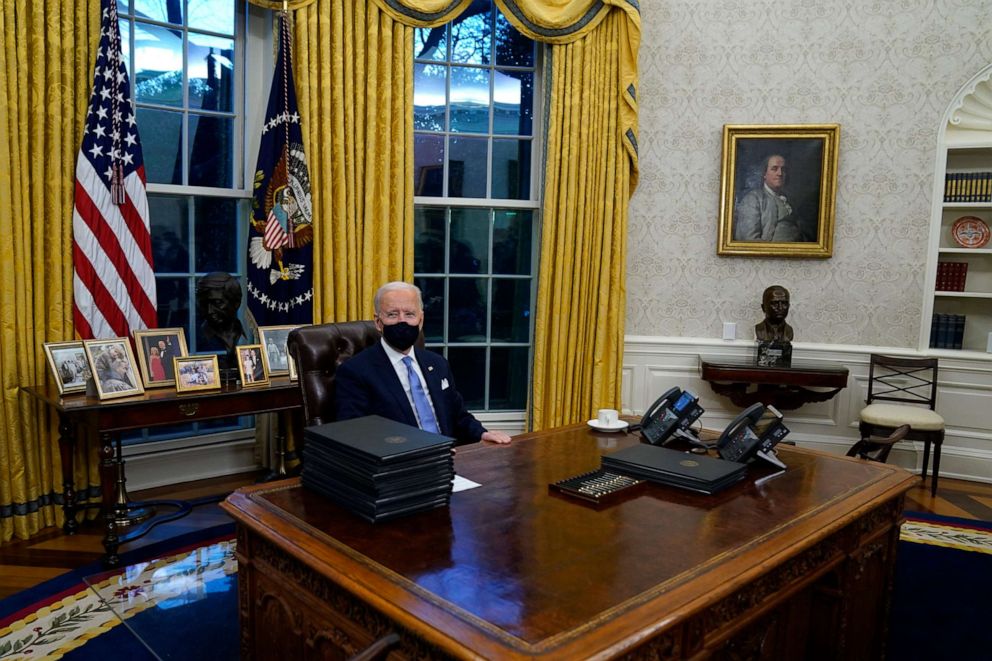
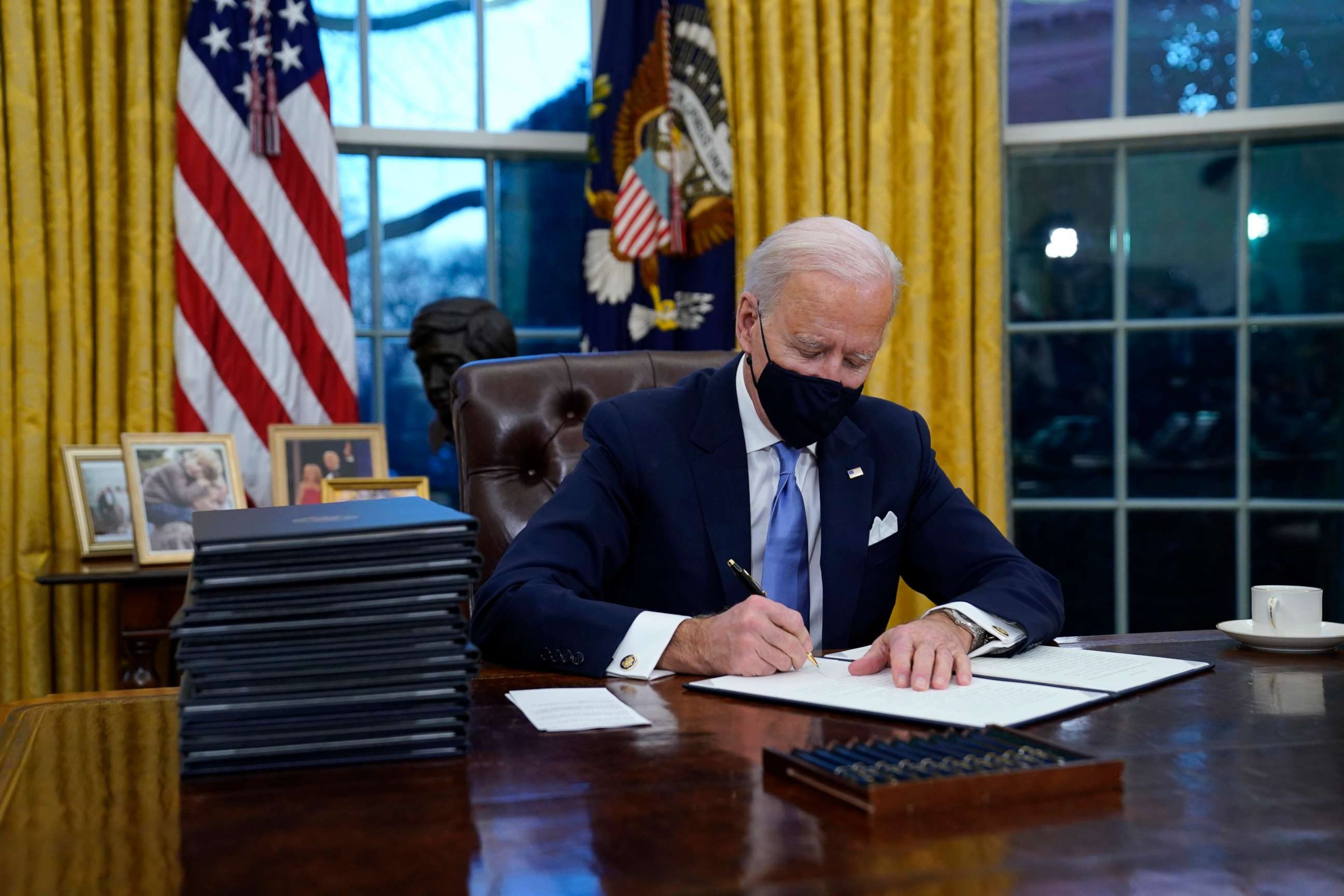
President Joe Biden signs his first executive orders in the Oval Office of the White House, Jan. 20, 2021, in Washington.
Evan Vucci/AP

His two other actions expected Thursday are a presidential memorandum directing FEMA to increase state reimbursements from 75% to 100% for National Guard personnel and supply costs and a presidential directive to support the international COVID-19 response, which the Biden team is calling an effort to restore America’s leadership on the world stage.

-ABC News' Molly Nagle and Justin Gomez
Jan 21, 2021, 9:45 AM EST

Fauci returns to a White House press briefing

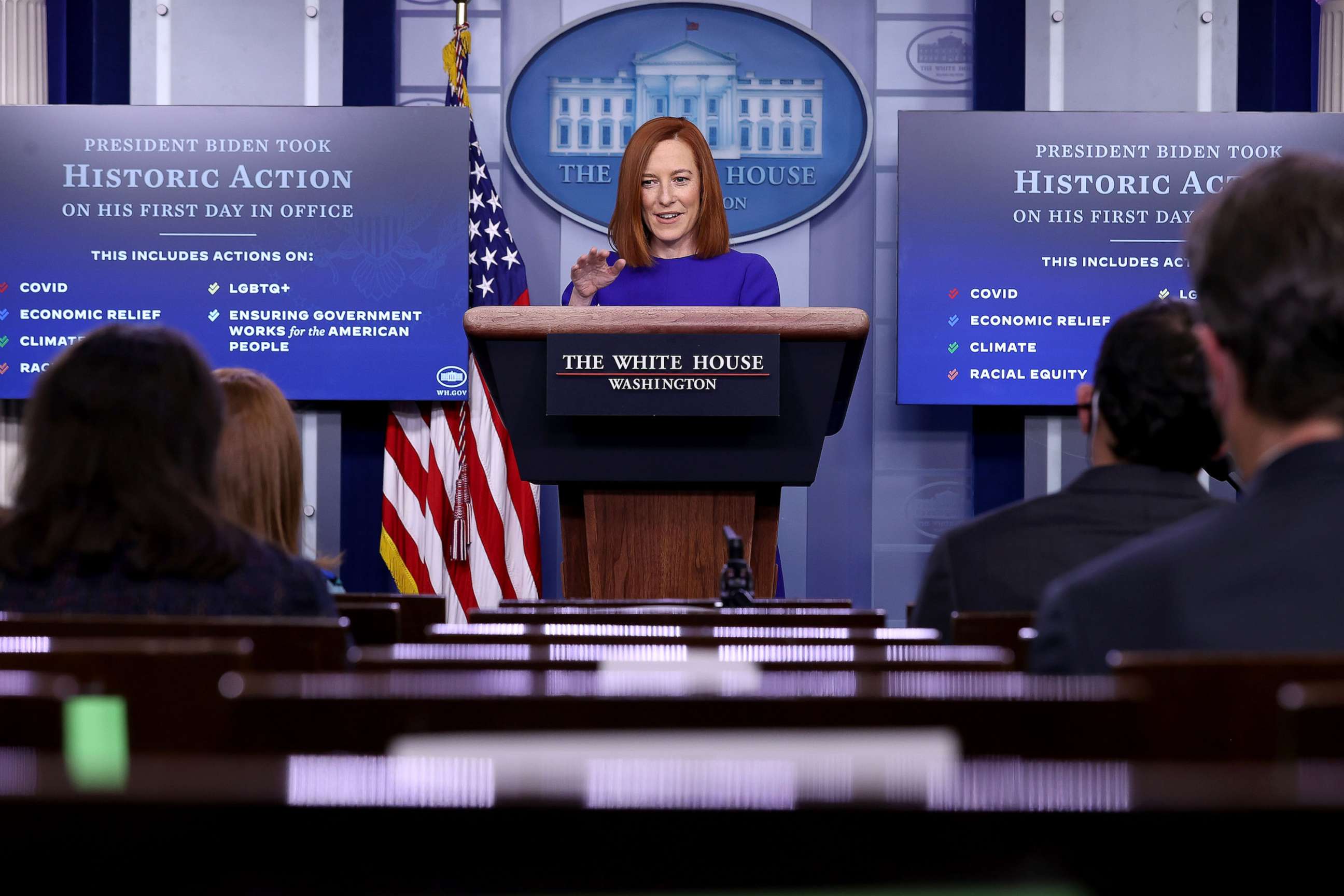
Continuing its theme that the Biden administration is "hitting the ground running," White House press secretary Jen Psaki announced she'll be joined by the nation's top expert on infectious diseases, Dr. Anthony Fauci, at her afternoon press briefing in Biden's first full day in office.

"I will also be bringing Dr. Fauci to the briefing room today as part of our effort to ensure that we're having public health experts, medical experts leading our communication about the process that is under way to get the pandemic under control," Psaki told MSNBC Thursday morning.

Fauci stopped appearing at White House briefings after he fell out of favor with President Trump.

Psaki told reporters at her first press briefing on Inauguration Day she plans to hold daily White House briefings Monday through Friday.

White House Press Secretary Jen Psaki conducts her first news conference of the Biden Administration in the Brady Press Briefing Room at the White House, Jan. 20, 2021.
Chip Somodevilla/Getty Images

Psaki said in preparing for her new position, Biden told her that "he would be watching" her briefings, and she said that it’s a major priority for the president that her messaging "really comes from the top." 

With the first day focused on the pandemic, Psaki told CBS conversations between administration officials with counterparts on Capitol Hill on Biden's $1.9 trillion COVID-19 relief package kicked off before the president took his oath of office and that those will continue "with speed in the days ahead" now that the administration is in place.

She also stressed the new administration wants to level with the American people that getting the pandemic until control is "going to take months and months."

-ABC News' Jordyn Phelps

Jan 21, 2021, 9:48 AM EST

Biden, Harris to spend 1st full day focusing on pandemic

Biden is waking up in the White House for the first time as 46th president of the United States and Vice President Kamala Harris to the fact that for the first time in American history a woman is serving as vice president.

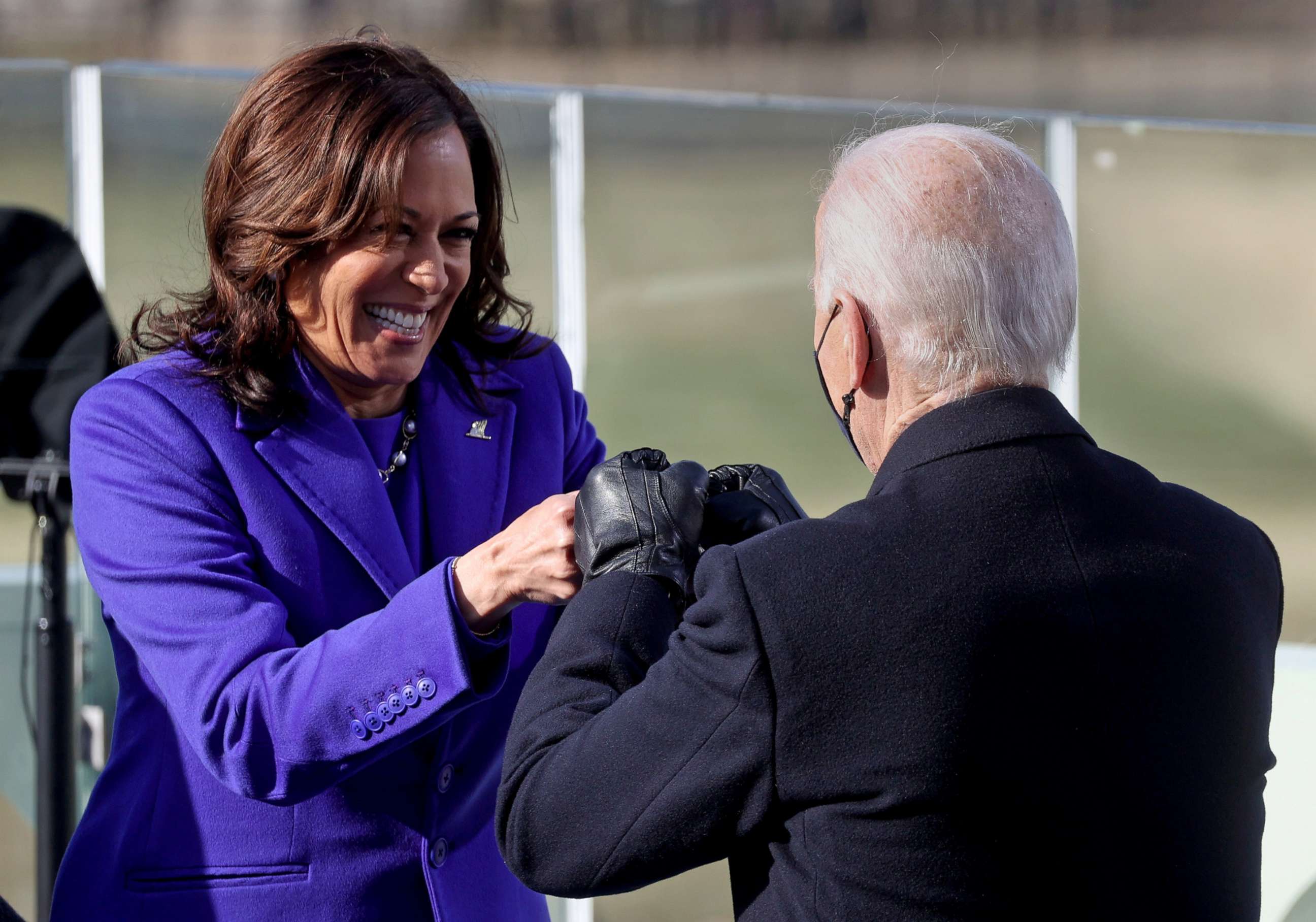
Kamala Harris bumps fists with Joe Biden after being sworn in as Vice President of the United States during the inauguration on the West Front of the U.S. Capitol in Washington, D.C., Jan. 20, 2021.
Jonathan Ernst/Reuters

After a historic inauguration, they'll start the day alongside their spouses with an inaugural prayer service from the Washington National Cathedral but attending virtually from the White House Blue Room. Their first full day in office will focus on the coronavirus pandemic, with Biden set to deliver afternoon remarks on his administration's COVID-19 response, take 10 executive actions aimed to control the pandemic and receive a COVID-19 briefing.

President Joe Biden signs his first executive order in the Oval Office of the White House, Jan. 20, 2021, in Washington.
Evan Vucci/AP

Ahead of introducing what it has deemed the "National Strategy for the COVID-19 Response and Pandemic Preparedness," the Biden administration addressed other top priorities overnight including moving to halt deportations of certain non-citizens for 100 days to review immigration policies. The president on Wednesday took at least 15 executive actions from invoking a mask mandate on federal properties and reversing now former President Donald Trump's Muslim ban to moving to rejoin both the World Health Organization and the Paris Climate Accord, barreling faster to dismantle his predecessor's legacy than other modern presidents.

Biden and Harris are taking office amid a racial-justice reckoning, a struggling economy and with the systems of government having come under literal attack by supporters of the man they defeated. While Wednesday's inaugural festivities saw powerful musical performances and poetry, amid history-making formalities, the surreal fact lingered: They took the office on the same Capitol steps that violent pro-Trump protesters climbed to storm the halls of Congress precisely two weeks earlier.

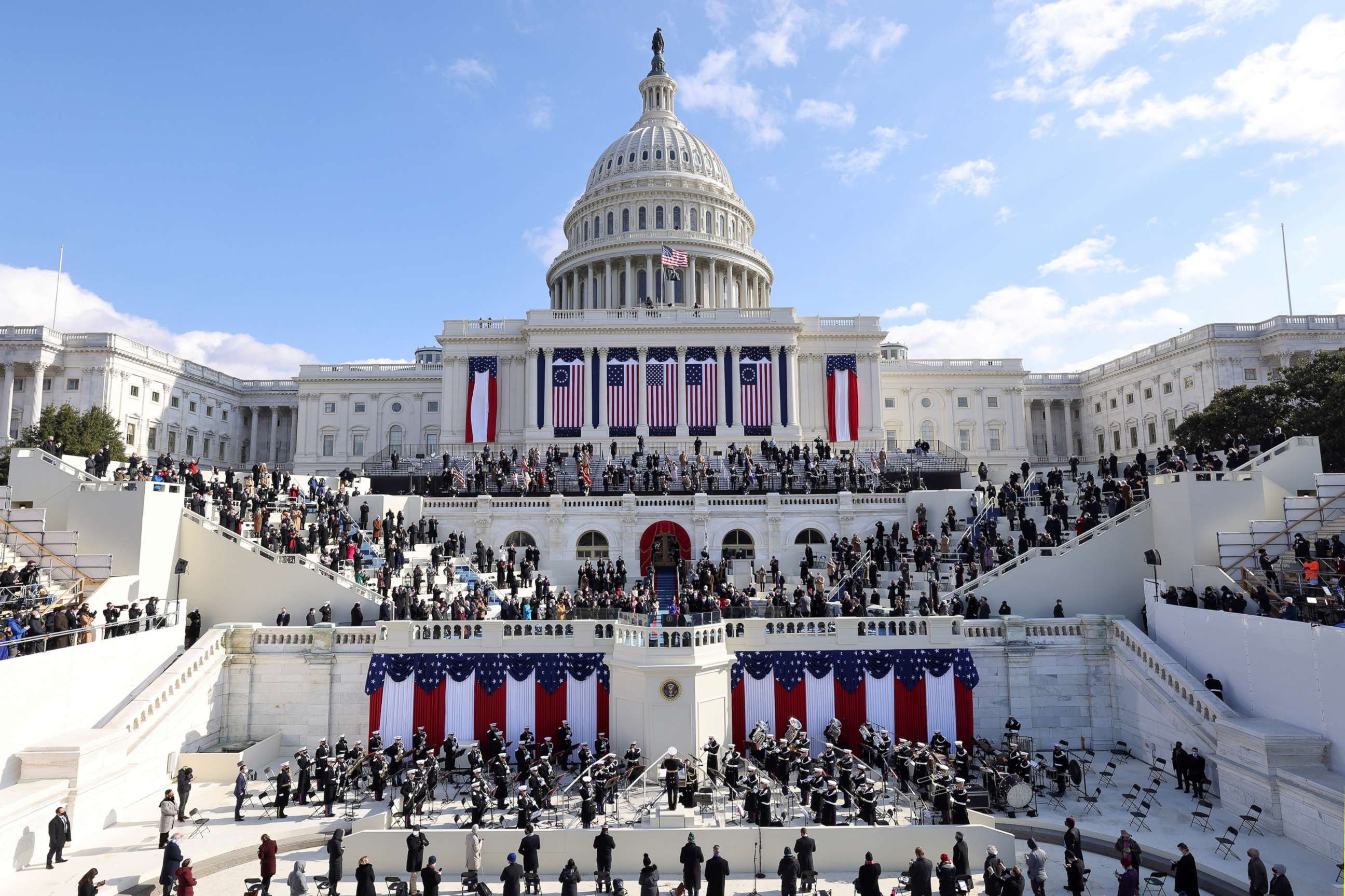
An overview of the Capitol during the inauguration of Joe Biden as the 46th President of the United States on the West Front of the U.S. Capitol in Washington, Jan. 20, 2021.
Jim Bourg/Reuters

In the wake of the seige and in their first days of office, Biden and Harris will also have to contend with Trump's impeachment trial which will be taken up in the newly Democratic Senate as soon as the end of this week, competing for floor time with their legislative agenda and Cabinet confirmations.

Jan 21, 2021, 8:20 AM EST

Fauci announces US will remain a member of the WHO

The United States will remain a member of the World Health Organization, Dr. Anthony Fauci, the nation's leading infectious disease expert, announced Thursday.

Fauci, director of the U.S. National Institute of Allergy and Infectious Diseases, made the announcement via video link to the WHO's executive board in Geneva, a day after Joe Biden was sworn-in as the 46th president of the U.S.

"I am honored to announce the United States will remain a member of the World Health Organization," Fauci told the board Thursday, adding that the U.S. will also "fulfil its financial obligations" to the WHO and stop reducing its staff at the United Nations agency.

Fauci, who is Biden's chief medical adviser on the coronavirus pandemic, also announced that the president will issue a directive Thursday that shows the country's intent to join the COVAX Facility, a global initiative to ensure rapid and equitable access to COVID-19 vaccines for all countries regardless of income.

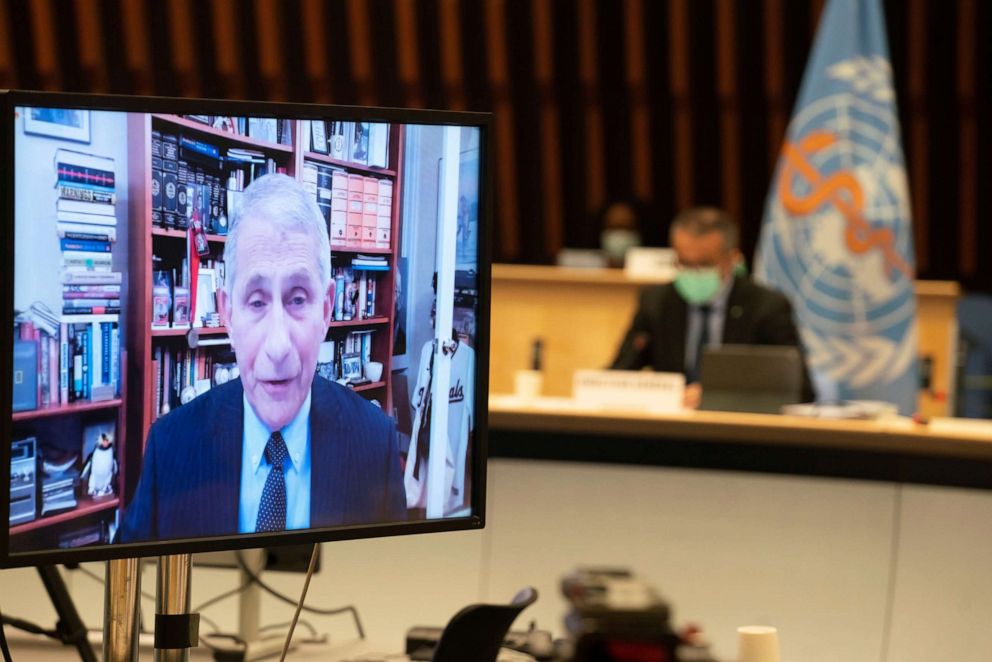
PHOTO: Dr. Anthony Fauci, director of the U.S. National Institute of Allergy and Infectious Diseases, speaks via video link during a meeting with the World Health Organization's executive board in Geneva, Switzerland, on Jan. 21, 2021.
Dr. Anthony Fauci, director of the U.S. National Institute of Allergy and Infectious Diseases, speaks via video link during the 148th session of the World Health Organization's executive board on the COVID-19 outbreak in Geneva, Switzerland, on Jan. 21, 2021.
Christopher Black/WHO/Handout via Reuters

Within hours of becoming president, Biden had signed an executive order reversing former President Donald Trump's decision to withdraw from the WHO. Trump had accused the organization of failing to correctly respond to the coronavirus pandemic and of allegedly giving too much power to China.

In an interview Thursday with ABC News' Michael Strahan on "Good Morning America," Fauci said rejoining the WHO is "very important" and that the country's withdrawal "was very disconcerting to everybody."

"When you're dealing with global pandemic, you have to have an international connectivity, and for us to not be in the WHO was very disconcerting to everybody, all the member countries including the health officials here in the United States," he said. "So the official announcement that we are rejoining, we're going to live up to our financial commitments and a whole bunch of other things, it was really a very good day. I mean, the response I'm getting from my colleagues all over the world is really very refreshing."

-ABC News' Morgan Winsor

Sponsored Content by Taboola