Feb 12, 2021, 6:26 PM EST
Question, answer period ends
The Senate has completed the question-and-answer period of the impeachment trial
Biden remembered those who were killed and called for unity going forward.
Former President Donald Trump's historic second impeachment trial ended with a 57-43 vote to acquit in the Senate. He faced a single charge of incitement of insurrection over his actions leading up to the Jan. 6 riot at the U.S. Capitol.
The Senate has completed the question-and-answer period of the impeachment trial
Sen. Marco Rubio, R-Fla., asked both House managers and Trump's legal team if a future Congress could impeach a former secretary of state.
"Voting to convict the former president would create a new precedent that a formal official can be convicted and disqualified by the Senate," Rubio's question said.
"Therefore, is it not true that, under this new precedent, a future House facing partisan pressure to “lock her up” could impeach a former secretary of state and a future Senate be forced to put her on trial and potentially disqualify from any future office?"
Lead House manager, Rep. Jamie Raskin, D-Md., said that the hypothetical question had "no bearing" on the trial.
"In this case, we have a president who committed his crimes against the republic while he was in office. He was impeached by the House of Representatives while he was in office," Raskin said. "So, you know, the hypothetical suggested by the gentleman from Florida has no bearing on this case because I don't think you’re talking about an official who was impeached while they were in office for conduct that they ... committed while they were in office."
Trump lawyer, Michael van der Veen said that the question represented a "slippery slope," saying that impeachment of former officials could become much more common.
"If you see it their way, yes. If you do this the way they want it done, that could happen to, the example there, a former secretary of state. But it could happen to a lot of people. And that’s not the way this is supposed to work," van der Veen said. "And not only could it happen to a lot of people, it’d become much more regular too."
Lead House impeachment manager Rep. Jamie Raskin, D-Md., answered a pointed question from Sen. Richard Blumenthal, D-Conn., on the Brandenburg case -- the landmark for incitement of a riot in a criminal proceeding -- and whether the case prohibits holding public officials accountable through the impeachment process for any incitement of violence.
"They (Trump's defense attorneys) are treating their client like he is a criminal defendant. They are talking about beyond a reasonable doubt," Raskin said, pressing his view that impeachment is the proper course of action, while Trump's defense attorneys have argued, in part, Trump hasn't reached the Brandenburg standard.
"They think we are making a criminal case here. My friends, the former president is not going to spend one hour or one minute in jail, but this is about protecting a Republican articulating and defining the standards of presidential conduct -- and if you want this to be a standard for totally appropriate presidential conduct going forward be my guest," Raskin said. "We are headed for a different kind of country at that point."
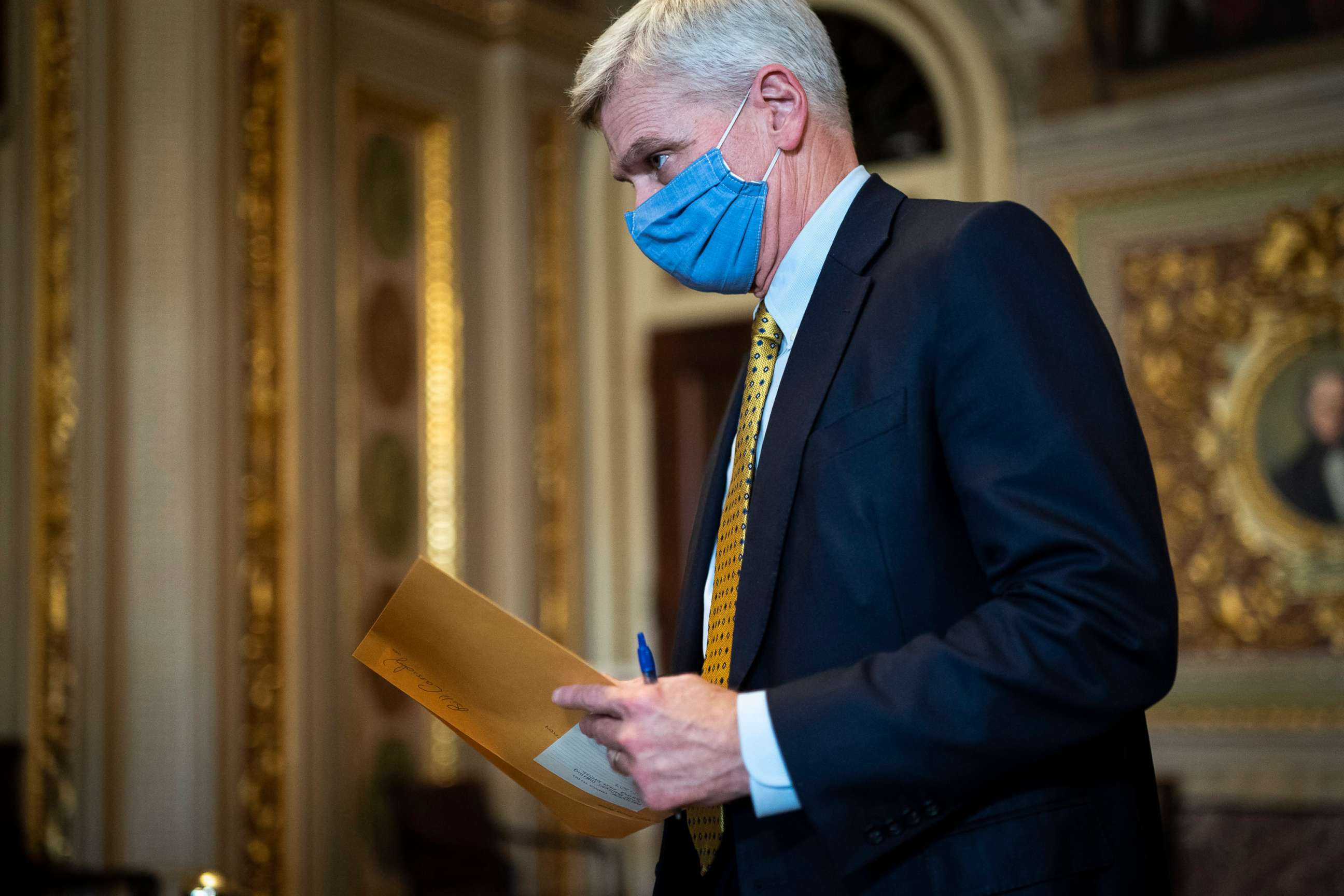
Sen. Bill Cassidy, R-La., asked both Trump's defense team and House managers if Trump knew about the rioters and that Vice President Mike Pence was still in the Capitol.
"The tweet and lack of response suggests President Trump did not care if Vice President Pence was endangered or law enforcement was overwhelmed. Does this show that President Trump was tolerant of the intimidation of Vice President Pence?" Cassidy asked.
"Directly, no," Michael van der Veen answered on behalf of Trump. He went on to dispute the facts cited in the question, which claimed that Sen. Tommy Tuberville, R-Ala., spoke to Trump at 2:15 p.m. and then Trump went on to tweet at 2:24 p.m. that Pence lacked courage, possibly endangering his own vice president if insurrectionists had found him and his family.
br/>
"I have a problem with the facts in the question," van der Veen said.
Cassidy, who joined Democrats and five other Republicans in voting that the trial is constitutional, changing his vote from an earlier motion on the issue, said on Thursday he hoped the defense team can explain the timeline of events and Trump's repeated assertions that the election was stolen.
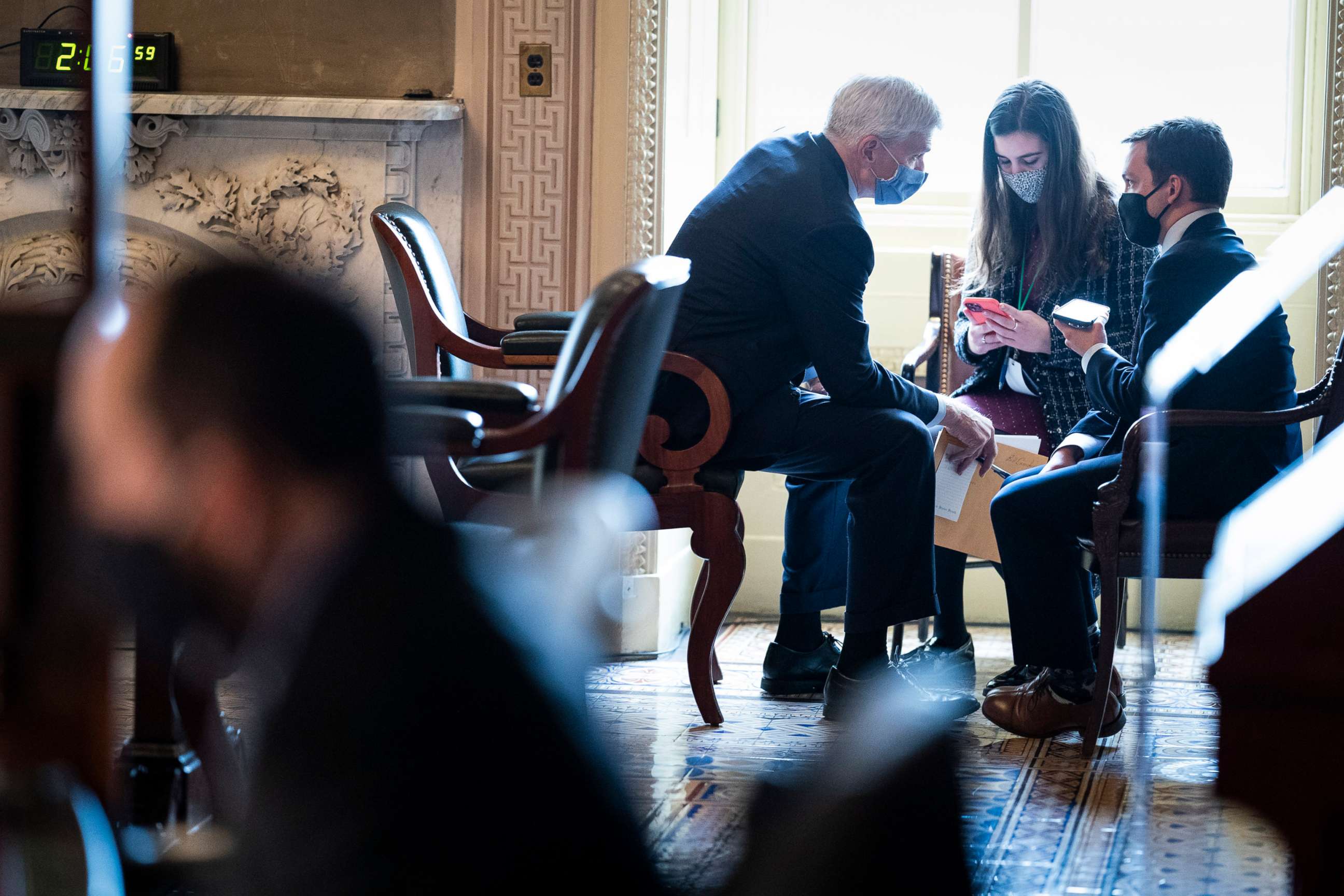
Cassidy's spokesperson tweeted this afternoon he was "weighing both sets of arguments and is reviewing memos from both points of view as part of his thought process before coming to a conclusion" after a photographer caught Cassidy carrying papers, which read, "The House Managers did not connect the dots to show President Trump knew that the attack on the Capitol was going to be violent and result in the loss of life."
When the House managers turn to answer came, Rep. Jamie Raskin, D-Md., said, "The council for the president keeps blaming the House for not having the evidence that's within the sole possession fo their client, who we invited to come and testify last week."
"We went a letter on February 4th, I sent it directly to President Trump, inviting him to come and to explain and fill in the gaps of what we know about what happened there, and they sent back the contemptuous response," Raskin continued.
"Rather than yelling at us and screaming about how we didn't have time to get all of the facts about what your client did, bring your client up here and have him testify, under oath, about why he was sending out tweets denouncing the vice president of the United States, while the vice president was being hunted down by a mob that wanted to hang him," he said.