As midterms near, grocery prices remain top of mind for many Americans
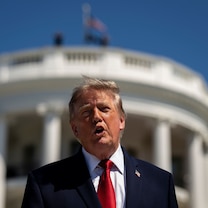
President Donald Trump vowed during his campaign that he would reduce prices.
PEEKSKILL, New York -- Doreen Hodge didn’t initially plan to shop at a discount supermarket Monday afternoon. But the Peekskill, New York, resident said making the trip to a low-price retailer was worth it given the current cost of food.
"Grocery prices are high everywhere," Hodge told ABC News. "I just actually came here to see if something I wanted to buy was lower."
The cost of food was one of the centerpieces of the 2024 presidential cycle -- and remains a key issue as the midterm election nears.

Two years ago this week, while seeking a second term in the White House, then-candidate Donald Trump spoke in front of his country club in Bedminster, New Jersey, with multiple name-brand food products on display. Standing between two tables full of food store items such as cereal, deli meat, milk, eggs, baby formula and bread, Trump called out then-President Joe Biden and then-Vice President Kamala Harris over the rising cost of everyday grocery items.
"Young people are being devastated by what they’ve done to our country. Grocery prices have skyrocketed," Trump said at the time.

Data from the U.S. Bureau of Labor Statistics shows that grocery prices nationwide rose 2.7% over the year ending in July, the most recent month on record, which amounts to triple the year-over-year grocery inflation at the time of Trump’s 2024 address in Bedminster.
Food prices remain top of mind for many Americans. An Associated Press-NORC poll released in early August found that two-thirds of adults disapprove of Trump's handling of the economy.
That same poll found that 41% of Americans said they were concerned about being able to afford groceries over the next few months, up from 24% in April. Nearly half of Americans said the cost of groceries was a major source of stress.
Shopper frustration is more complicated than a glance at the latest inflation data, however, since many people react to an accumulated change in prices on store shelves, David Ortega, a food economist at Michigan State University, told ABC News.
Over a five-year stretch since a pandemic-induced bout of acute inflation, grocery prices have increased more than 20%, most of which took place between 2021 and 2022, a period when Biden occupied the White House, U.S. Bureau of Labor Statistics data shows.
Outrage among consumers stems in part from the impact of those long-term price increases, in addition to a rekindling of grocery inflation since Trump took office, according to Ortega.
"The reality is the price level today is significantly higher than it was pre-COVID," he said.
“We were able to make a lot of progress in bringing that rate of inflation for food down, but what we’ve seen in the past couple of years is food inflation has started to pick up again,” Ortega added.
And shoppers are noticing.

"We’re spending a lot of money but leaving with smaller bags," shopper Aaron Thevenin told ABC News while leaving a grocery store in West Haverstraw, New York.
"You spend like almost double what you were planning to spend," Lori Tetro of Cortlandt Manor, New York, said.

Peekskill, West Haverstraw and Cortlandt Manor all sit within New York’s 17th Congressional District, an area covering multiple suburbs north of New York City that is split relatively evenly between Democrats and Republicans.


Control of Congress could come down to districts like the 17th, which is currently represented by Republican Rep. Mike Lawler. He has co-introduced a number of bipartisan grocery-related bills during his time in Congress, including the Lower Grocery Prices Act in 2025 and the No Rigged Grocery Prices Act in May.

Cait Conley, the Democratic candidate who is taking on Lawler in the 17th District, is pointing to rising supermarket bills as one of the reasons why voters should consider flipping the seat.
"You’re watching families have to make tradeoffs between filling up the grocery cart and the gas tank," Conley told ABC News.

House Speaker Mike Johnson, a Republican, said Monday that Trump is "laser focused on bringing down the cost for everybody" and that he hopes that a coalition of nations working together to help resolve the war in Iran will lower grocery prices.
The White House, in a statement to ABC News on Thursday, said that the president has "implemented policies that have brought prices of key essentials ranging from prescription drugs to eggs to auto insurance down in historic ways."
"The Administration remains focused on delivering more relief for American families, and as traffic through the Strait of Hormuz normalizes, energy prices -- and thus overall inflation -- will continue cooling again," White House spokesman Kush Desai said in the statement.
The Trump administration issued a statement in early August noting that "private sector companies are responding to President Trump's call by delivering tangible price reductions on everyday goods and services — putting money back in the pockets of American workers and families."

To Americans like Hodge, high grocery prices are continuing to shape their everyday shopping decisions.
"It’s terrible, but you do what you have to do," Hodge said. "We all have to eat."
Related Topics

Popular Reads

ABC News Live