Blue Origin rocket explodes during test at Cape Canaveral
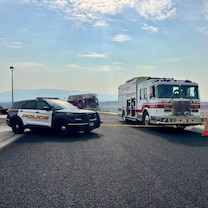
Local authorities said there were no reported injuries.
A Blue Origin rocket exploded on the launch tower in a fiery blast during a test of its engines on Thursday night, the company said.
The static fire test at the Cape Canaveral Space Force station in Florida came in preparation for the company's upcoming launch of its New Glenn rocket, which aimed to send 48 Amazon satellites into low-earth orbit.
In a statement on social media, Blue Origin said the rocket "experienced an anomaly during today's hotfire test."
In a separate post, Blue Origin owner Jeff Bezos, said: "All personnel are accounted for and safe. It’s too early to know the root cause but we’re already working to find it. Very rough day, but we’ll rebuild whatever needs rebuilding and get back to flying. It’s worth it."
In a statement on social media, Sheriff Wayne Ivey of Brevard County, Florida, where Cape Canaveral is located, said there were no reported injuries, "and the current plan is to allow the contained fire from the explosion to burn itself out."
The sheriff said there is no danger or threat to the community.
A static fire engine test is when the rocket’s engines are ignited and run at full thrust while the vehicle is attached to the launch tower. The vehicle is unable to go anywhere during the test. The goal is to verify that everything works under real operating conditions before committing to an actual launch.

The incident is a significant setback for Blue Origin. The upcoming mission would have been only the fourth time the rocket had flown, and Thursday's explosion followed an earlier failed mission in which the company was unable to successfully place a commercial payload in the proper orbit.


NASA has contracted Blue Origin to provide lunar landers for the Artemis and Moon Base programs. The landers would need the company's New Glenn rocket to get into orbit.
In a statement, NASA Administrator Jared Isaacman said the space agency was aware of the incident.
"Spaceflight is unforgiving, and developing new heavy-lift launch capability is extraordinarily difficult," Isaacman said in the statement. "We will work with our partners to support a thorough investigation of this anomaly, assess near-term mission impacts, and get back to launching rockets."
Isaacman added: "We will provide information on any impacts to the Artemis and Moon Base programs as it becomes available."
Related Topics

Popular Reads
ABC News Live